
What if touch does more than guide tissue — what if it conveys relaxation that can be amplified?
This is not a concept taught in manual therapy, yet clinical observation suggests it may be real.
Have you ever considered that touch might have a scalable function?
If touch can be amplified — if it possesses a scalable property — it suggests a mechanism that could transform clinical outcomes, allowing tissues to become more responsive through a pathway not described in current neurological teaching.
If your own touch can be amplified, it represents an observation beyond current training — and an opportunity to extend your clinical impact, particularly in patients who have not responded to conventional mechanically taught approaches.
Importantly, any benefit would be immediately apparent to you in practice.
Manual therapy has always relied on touch. Across osteopathy, physiotherapy, chiropractic and other hands-on disciplines, touch is central to patient care — yet the mechanism by which it produces relaxation and physical change remains poorly understood.
What is not taught within undergraduate manual therapy training is that touch itself may function as a therapeutic modality of relaxation — with scalable properties — and that this relaxation may be progressively amplified.
Clinical observation suggests that progressive changes in the practitioner’s parasympathetic state can be conveyed stepwise through touch to the patient. This effect may be further enhanced through the introduction of diamagnetic materials such as water or copper braid. The resulting increase in tissue compliance appears to occur without additional mechanical force.
The concept that relaxation can be transmitted — even through clothing — and amplified through the therapist’s hands alone is not recognised within current professional education. Neither the practitioner’s internal physiological state, nor the potential influence of diamagnetic materials, forms part of mainstream training.
If validated, this represents a previously unrecognised observation and suggests a possible mechanism by which touch conveys change. In practical terms, it may allow manual therapists to achieve improved outcomes with less force and reduced mechanical risk.
This article does not present a finished theory or branded technique. Rather, it outlines repeatable clinical observations pointing toward an unexplored dimension of therapeutic interaction — one that practitioners can test for themselves — and which may reveal a latent capacity within manual therapy: the amplification of relaxing touch.
A Core Observation
Repeatedly, I have observed that a patient’s flexibility changes according to the parasympathetic state of the practitioner — even when the patient themselves shows no measurable autonomic change.
In other words, the patient’s body appears to relax without their own nervous system demonstrating the typical physiological markers of relaxation.
This suggests that something may be conveyed through touch that is not mediated by the patient’s autonomic nervous system and may therefore sit outside conventional neurological explanations.
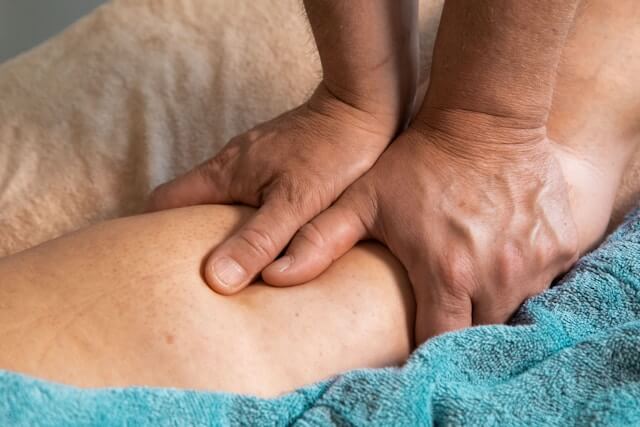
Photo by Bas Peperzak on Unsplash
The Assessment Method
To examine this effect, I used a standard clinical test: the straight-leg raise (SLR) — a widely accepted way to measure changes in flexibility and tissue tension.
1. Practitioner Parasympathetic Activation
When the practitioner enters an induced parasympathetic (relaxed) state using pleasant sensory stimuli — such as agreeable smell, sweet tastes, or calming music — the following occurred: (I used a Moam sweet, lemon essential oil on a Q-tip on nose, head phones)
- The patient’s SLR range increased sequentially
- The change was measurable and repeatable, (after lags phase)
- Galvanic Skin Response (GSR) confirmed parasympathetic activation in the practitioner.
- No GSR change was detected in the patient
This indicates the patient’s increased flexibility was not caused by their own autonomic shift. However something was transferred to the patient in an unacknowledged modality.
2. Patient Parasympathetic Activation
When the same pleasant stimuli were applied directly to the patient: in an additive sequence
- A GSR change was detected in the patient
- Further sequential increases in SLR were observed
This confirmed the expected relationship between autonomic activation and tissue relaxation when stimulation occurred directly in the patient.
3. Introduction of Diamagnetic Material
A further observation emerged when diamagnetic materials — such as copper braid or approximately 11kg of water — were introduced to the practitioner, not the patient. Sequential addition of water (and copper braid) led to a corresponding sequential increase of SLR
The results:
- The patient again became more flexible
- Additional material increased SLR further
- No GSR change occurred in either practitioner or patient
This strongly suggests the relaxation response in the patient was neither autonomic nor neurological in origin.
The Dive Reflex Technique – Hector Wells
Watch on YouTube
What Might Be Happening?
From these observations, several deductions can reasonably be proposed:
- A practitioner’s parasympathetic state can induce relaxation (via the hands) in a patient without a corresponding autonomic shift in the patient
- Diamagnetic materials can produce a similar effect
- Therefore, the mechanism is unlikely to be sympathetic or parasympathetic signalling within the patient, as not GSR change was recorded.
- A biophysical transmission through the practitioner’s touch most likely be occurring
One potential explanation involves water.
Water is:
- Strongly diamagnetic (as is copper)
- Central to the mammalian dive reflex
- The primary medium of the intra-uterine developmental state
The dive reflex appears to return tissues toward a baseline state by reducing sympathetic over-activation. These observations suggest therapeutic touch may interact with this process — and that its effects may be amplified, as seen with increasing water volume to the practitioner.
Photo by Antonio Araujo on Unsplash
Why This Matters
To my knowledge, these findings are not described in current osteopathic, physiotherapy, or manual therapy literature, despite touch being foundational to these professions. Touch conveying relaxation is not taught as a scalable interaction.
If substantiated, they raise important questions:
- What manual therapists may have been unknowingly utilising for decades, or deny using.
- What might be lost as therapy becomes increasingly mechanistic
- How the therapeutic value of touch could be better understood and preserved
- The possibility of scalable relaxation using diamagnetic materials ( water, copper) to enhance clinical outcomes.
At a time when manual therapies are under pressure to justify themselves solely through mechanical explanations, confirming or refuting such observations would support professional integrity and development.
An Invitation to Explore
This article is not a request for endorsement of a theory or promotion of a technique.
It is simply an invitation to:
- Acknowledge the novelty of the observations
- Explore them further in your own time and clinic.
- Support appropriate investigation, to emphasise touch is not a mechanistic interaction alone.
Within any professional community, a small proportion of practitioners are naturally curious innovators — those few willing to examine unexpected findings and test them responsibly.
For colleagues interested in exploring these observations, I am willing to share what I have learned over two decades of working with the dive reflex and diamagnetic materials, and how these approaches may enhance clinical skill.

Photo by Paul Pastourmatzis on Unsplash
The purpose is not to replace existing knowledge, but to ask a simple professional question:
Could the healing power of touch involve more than we currently understand?
Main – Photo by Markus Spiske on Unsplash
